

Drawn to Dystopian Narratives
I am not entirely sure why I am so irresistibly attracted to dystopian stories, such as George Orwell’s iconic 1984 or the film V for Vendetta. Recently, I even felt compelled to start watching The Handmaid’s Tale, which surprised me. These works captivate me, possibly because of the unsettling similarities I notice between their fictional worlds and our current reality.
“V for Vendetta” and Its Relevance
Upon rewatching V for Vendetta—a true masterpiece that has remained relevant since its release in 2005—I was struck by the remarkable parallels between the events depicted in the film and what is happening in the United States today.
America increasingly mirrors the dystopian landscape shown in the film, and these resemblances are too significant to be dismissed as mere coincidence.
Authoritarian Parallels and the Rise of Power
The Trump administration has demonstrated great skill in leveraging national anxiety to justify the unprecedented expansion of executive power. In the film, the High Chancellor Adam Sutler, portrayed by John Hurt (who also played Winston Smith in 1984), rarely appears in person—mostly seen on television until his dramatic final moments. Sutler’s visual likeness to figures such as Oswald Mosley and Adolf Hitler is striking, reflected in his hairstyle, stature, mustache, and military attire. His ascent to power is marked by manipulative politics and the exploitation of public fear.
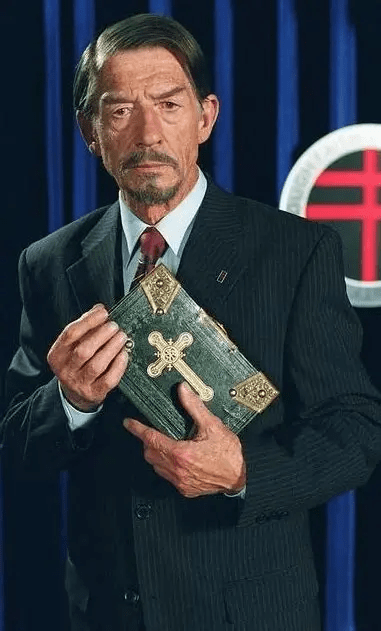
Following a global nuclear war, the United Kingdom’s survival is credited to its geographic isolation and the decommissioning of its nuclear arsenal. The ruling organization, Norsefire, rises by promising stability and the restoration of the nation. Amid global chaos, the party consolidates power by pledging order and security to a frightened population. However, this newfound order comes at a steep cost—political opponents, along with religious and ethnic minorities, are rounded up and sent to concentration camps. With these potential threats eliminated, Norsefire rapidly asserts its control over the country.
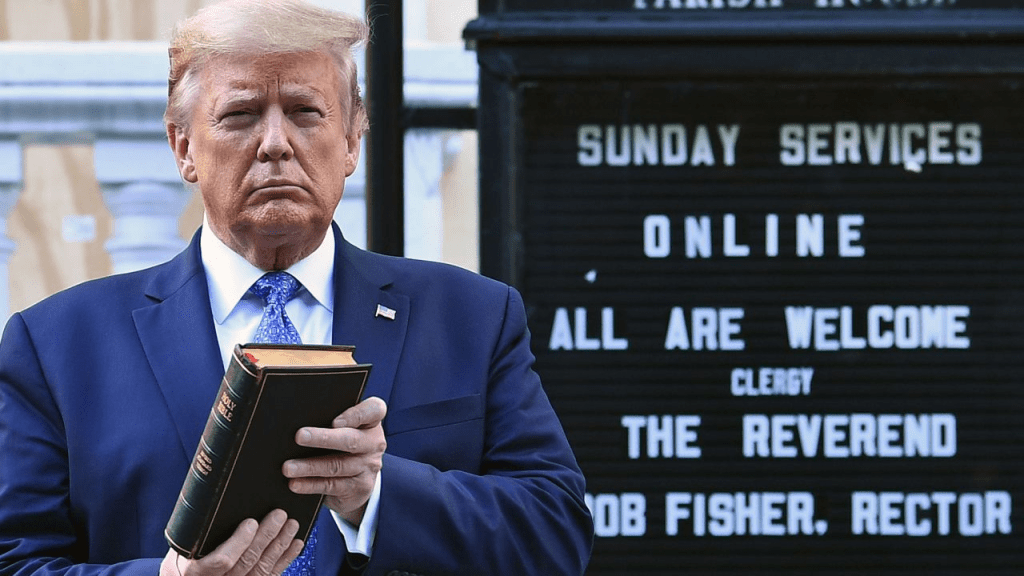
The Party’s Public Image and Its True Nature
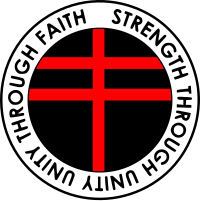
Publicly, the Norsefire party presents itself as a Christian fascist party supportive of the Anglican Communion. Privately, however, party leaders are indifferent to religious doctrine, allowing high-ranking members to disregard Christian morality as long as their actions do not challenge party supremacy. The party’s ideology is loosely modeled on the Nazi Party and the private religious attitudes of Adolf Hitler.
Modern Echoes in America
These patterns feel eerily familiar—concentration camps, detention centers, a climate of fear, wars, propaganda, and a self-interested leader intent on canceling elections under the pretense of national good. Such echoes raise disturbing questions about the direction in which the country is heading.
As I ponder these connections, I wonder where a figure like V is when we need him. Other contemporary works, such as The Handmaid’s Tale—which I have just started watching—also resonate with these themes. I realize I should probably read the book first, since it has been around since 1985.
The Guy Fawkes Mask and Resistance
The adaptation’s iconic Guy Fawkes mask, worn by V, has come to symbolize collective resistance against tyranny. Since 2006, the mask has gained widespread recognition during protests, serving as a potent reminder that political oppression can be resisted by a determined citizenry. The parallels grow stronger when considering the administration’s manipulation of information.
In V for Vendetta, the broadcast system produces propaganda to suppress dissent and manufacture consensus.
Centralization of Authority and Surveillance
The current push by the White House to centralize authority is bolstered by the spread of advanced surveillance systems.
Government agencies have used real concerns about national security to justify ever-greater intrusions into privacy rights.
Propaganda and the Silencing of Dissent
State-sponsored propaganda, once a whispered subject, now flourishes openly in Washington, often echoing the rhetoric of foreign adversaries like Russia’s Vladimir Putin. Daily White House briefings depict an America under siege from both real and imagined enemies. Official statements routinely dismiss factual contradictions as fabrications.
President Trump amplifies these false narratives on platforms controlled by Elon Musk, ensuring that any opposition is quickly overwhelmed by a chorus of partisan support.
Just as V for Vendetta dramatizes a society consumed by uniform messages, modern America risks becoming an echo chamber that stifles rational debate. The influence of right-wing MAGA voices grows steadily, drowning out reasoned discourse in a carefully orchestrated wave of fear.
Warnings for the Future
The parallels between V for Vendetta and current events serve as dire warnings. If the film offers any hint of what may come, the country could continue its slide toward a society completely controlled under the banner of ideological purity.
The future may be shaped by a political environment where dissent is demonized, information is manipulated, and complacency is mistaken for duty. If this trajectory remains unchecked, it leads inevitably toward a system as oppressive as the film’s fictional dictatorship.
Relevant Commentary and Call to Action
I was particularly struck by Mitchell Sobieski’s piece in the Milwaukee Independent, “America mirrors ‘V for Vendetta’ as Trump accelerates authoritarian control over every aspect of society” V for Vendetta and America.
Given these troubling times, perhaps we should all don our metaphorical Guy Fawkes masks and remember the film’s most powerful—and timely—quote:
“Governments should be afraid of their people.”

 Joe Meyers Adventures