
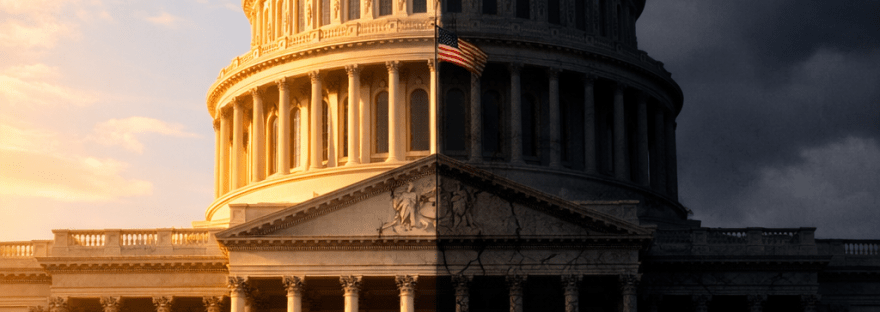
America’s quiet slide into gerontocracy
Introduction: The Argument That Stopped Me Cold
Every so often, you come across an article that doesn’t shout, doesn’t sensationalize, and doesn’t try to drag you into a partisan trench. It simply names a truth that’s been humming beneath the surface of American life.
That’s what happened when I read Yale professor Samuel Moyn’s recent interview, summarized in Yahoo News, where he argues that America has quietly become a gerontocracy — a society governed by the old, often at the expense of the young.
Not as an insult.
Not as a political attack.
But as a demographic reality.
Once you see it, you can’t unsee it.
America’s New Ruling Class: Moyn’s “Oldigarchy”
Moyn’s claim is stark:
| America’s wealth and political power are now concentrated in older generations “to an astonishing extent.” |
He describes a system where:
- Older Americans hold the majority of national wealth
- Older voters dominate political outcomes
- Homeowners — disproportionately older — shape local policy
- The political system rewards preservation over innovation
Moyn calls this an “oldigarchy” — a structure where the past governs the future.
This isn’t about blaming older Americans.
It’s about recognizing how the machinery of the country has shifted.
The Backlash: When Truth Feels Like Threat
What struck me wasn’t just Moyn’s argument — it was the reaction to it.
Some Boomers responded with hostility, even outrage:
| “I apologize for not dying soon enough for you…” |
| “Are you suggesting putting boomers on ice floes?” |
That kind of emotional volatility is revealing. It tells us that the generational conversation in America isn’t just political — it’s existential.
When identity becomes intertwined with power, even naming a demographic trend feels like an attack.
This is the same psychological mechanism behind so much of America’s political tension: truth becomes dangerous when people believe it threatens their place in the world.
The Real Divide: Past vs. Future
We talk endlessly about left vs. right, red vs. blue, rural vs. urban. But Moyn’s argument points to a deeper divide — one that explains the “vibe” of America better than any political commentary:
America is divided temporally.
- The past holds power
- The future holds urgency
- And the middle generation carries the burden of both
This is why the country feels stuck.
This is why every crisis feels like déjà vu.
This is why innovation feels impossible and nostalgia feels weaponized.
A nation governed by its past cannot adapt to its future.
The Lie Machine: How Narratives Keep Us Distracted
This is where Moyn’s argument intersects with the broader theme of The New American Lie Machine.
Instead of discussing structural generational imbalance, political media encourages us to fight each other:
- Young people are told they’re lazy or entitled
- Older people are told they’re selfish or hoarding wealth
- Middle-aged Americans are told to “work harder” while carrying both ends
Meanwhile, the real machinery — wealth concentration, demographic power, policy stagnation — goes unexamined.
The Lie Machine thrives when Americans blame each other instead of the system.
The Consequences of a Nation That Can’t Renovate
A society built to preserve rather than evolve becomes brittle. You can see it everywhere:
- Housing shortages
- Wage stagnation
- Climate inaction
- Healthcare collapse
- Political gridlock
- Cultural resentment
- A national mood of exhaustion
These aren’t isolated problems. They’re symptoms of a system that cannot adapt because the people with the most political influence have the most to lose from change.
The Human Cost: Gerontocracy Hurts Everyone
This is the part that matters most — and the part most people miss.
A gerontocracy doesn’t just harm the young.
It harms everyone.
- Older Americans suffer when society stagnates and institutions crumble
- Younger Americans suffer when opportunity collapses
- Middle-aged Americans suffer when they must support both ends
A rigid system eventually fails the very people it was designed to protect.
Closing Reflection: What Happens When the Future Stops Waiting?
America is entering a moment where the future is knocking louder than ever — economically, technologically, environmentally, culturally. And yet the nation’s political and economic machinery is still oriented toward preserving what was, rather than building what must be.
So the question becomes:
| What happens to a nation when the future has no seat at the table? |
At some point, the future stops asking.
At some point, it forces its way in.
At some point, the past must loosen its grip or risk breaking the country in its hands.
We are living in that tension now — the quiet, slow-motion conflict between what America has been and what America needs to become.
And the most dangerous lie of all is pretending that tension doesn’t exist.
Reference
Moyn, Samuel. Interview and analysis summarized in Yahoo News:
“Yale professor says America is now an ‘oldigarchy’ — and it’s hurting the country.”
(Readers should confirm details with the original article.)
The New American Lie Machine — Blog Post


