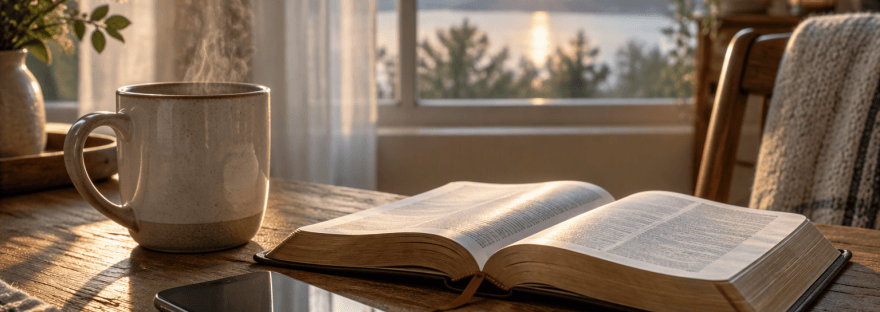
Most Sundays, I wake hoping for peace and feeling guilty before my feet even touch the floor. I know I will not be sitting in a church pew, and part of me still wonders what that says about my faith. Instead, I make coffee, settle into the quiet, and turn on a service online. I usually begin with Calvary Chapel Downey, the church where I gave my life to Jesus, then sometimes continue with Patria Church in Rancho Cucamonga, Rock Hill Church, Shadow Mountain, Rancho Cucamonga Community Church, or Worship Generation. I tell myself I am searching for a message I need to hear. Maybe I am also searching for reassurance that God still meets me here, at home, carrying all the things I have not been able to set down.
Some people may ask, “Why not just pick one?” They may be right. Perhaps watching several services is my way of trying to atone for not attending in person. Many Christians would tell me there is no substitute for being physically present with a church community.
Still, Sunday is often the first time all week that I can finally breathe. My mind gets a break from the relentless pace of life, and I find myself reflecting on work, family, writing, and my ongoing struggle with mental health and well-being. Lately, many things have weighed heavily on me.
That is the tension I keep returning to: I look to Sunday for peace, yet faith, politics, and my own self-judgment often follow me into the quiet. What begins as reflection can quickly become a reckoning with the country, the church, and the person I believe I should be.
When Faith and Politics Collide
One of the biggest factors is the state of our country. From my perspective, the president repeatedly speaks and acts in ways that deepen discord, hostility, and division among the people he represents. I believe members of his administration share responsibility, especially those who recognize the harm yet remain silent to protect their positions.
I understand that, for the most part, meaningful political change may not come quickly. But the damage has already been done, and the division may remain with us for years. I cannot pretend it has not affected the way I see the world—or myself. I have grown angry and resentful at the sheer bravado of people who appear able to act without accountability.
People often say, “You have no control over it, so why let it get to you? Ignore the noise. It will be over soon.” I understand the impulse behind that advice, but I do not find it comforting. We may not grasp the full extent of the damage until this presidency is over, and I hope serious investigations follow wherever they are warranted.
What brought these feelings to the surface last Sunday was something I witnessed during a service with Pastor David Jeremiah. I have watched him over the years and purchased and read many of his books. I do not question his love for Jesus or the devotion reflected in more than fifty years of ministry.
Before beginning a message on Esther, however, he spoke about politics and the importance of voting in the coming election. At first, his remarks sounded like a general reminder to participate. Then he described the election as a choice between common sense and communism. He referred to the San Diego mayoral race, mentioning Bill Wells and mayoral candidate Alexander Kraft. Because I do not live in San Diego, I do not know enough about either candidate to judge the race. What stayed with me was Pastor Jeremiah’s endorsement of Mayor Bill Wells.
Some may say this is not unusual, and they are right. Many churches I have attended use some version of the phrase, “Vote your conscience.” Yet this is also why I stopped attending what had once been my favorite church, Calvary Chapel Chino Hills, after Pastor Jack Hibbs openly promoted Trump for president. I still remember being there with my family when someone in the audience yelled, “Build the wall,” and people laughed.
What I Hope to Hear from the Church
What troubles me most is not that a pastor holds a political opinion. It is the possibility that political loyalty can begin to overshadow the moral demands of faith. Jesus was a political force in his own right, and I understand that. Yet the values I associate with him are kindness, respect, mercy, and love—the opposite of so much of what we see in the world around us. In my opinion, much of the church has remained silent. The Catholic Church and the pope have spoken against actions they view as unjust, including aspects of immigration enforcement, deportation, and mass detention. I have not heard the same clarity from many evangelical churches.
Evangelical leaders often say they do not want to turn the pulpit into a political platform; they want to focus on the Word of God. That restraint matters. But avoiding partisanship is not the same as remaining silent about cruelty, dishonesty, or injustice. Churches can be a moral voice in the world without becoming an arm of a political party, and that voice feels especially necessary now.
Does Pastor Jeremiah have a right to his opinion? Yes, just as you and I do. But he also has a platform that reaches millions, and that changes the weight of his words. Although someone might argue that his message was intended only for his local congregation in El Cajon, it was broadcast to a much wider audience. I am not saying he should be quiet or hide his political beliefs. I am saying that influence carries responsibility, especially when political endorsements are delivered from a place of spiritual authority.
I feel a deep conflict when my faith and politics collide. I am trying to be a good Christian, even though I would frankly rather not care about politics at all. Yet I see wealthy and powerful interests working to tip the scales in their favor, with dark money playing a prominent role in elections. I return to these same questions in my book Silent Nation because, for me, they are not abstract political themes; they are questions about power, conscience, and what silence allows.
The Personal Cost of Carrying It All
Ultimately, the anger does not remain political; I carry it inward. What I see as grave injustice and dishonesty in our country takes a toll on my mental health because it clashes with everything I was taught: be honest, tell the truth, be kind, and do the right thing. When those values seem powerless in public life, I begin to wonder whether they have served me in my own. Perhaps that is why I would make a terrible politician. I am simply a father, a husband, a world-builder, and a novelist.
Comparison, Inadequacy, and the News Cycle
That conflict shapes the way I see myself. Last Sunday, that meant confronting a deep sense of inadequacy as a father, husband, man, and provider. When I scroll through the news, I am constantly reminded of someone who appears to have succeeded—often at a young age. In those moments, I begin to feel that I have failed at life.
Of course, people are entitled to their success. The problem is not their achievement but my impulse to measure their journeys against mine. Much of what I read is clickbait—content designed to provoke a reaction, stir envy, or make readers dwell on what others have and they do not. It works. I put the phone down knowing I need to do that more often. What I consume affects my well-being and distorts the mirror through which I see myself.
Sometimes God—and perhaps the universe—finds a way to interrupt the story I am telling myself. Last Sunday, while I was picking up breakfast for my daughter at IHOP, a young male host said something unexpected: “I see you have really good energy.” His words were simple, but they offered me a glimpse of myself that I could not see on my own.
“Thank you,” I told him. “I try. And every time I come here, you are always so nice and helpful.” As I walked away, I kept thinking about what he had seen in me. I had arrived carrying the familiar belief that I was falling short, yet a stranger had noticed something good before I could dismiss it.
Learning to See Myself More Clearly
Too often, I see only the worst in myself. That is nothing new, but this brief exchange reminded me that the person others encounter may not be the person I criticize in private. It reminded me to meet myself with more kindness and respect—a practice that remains a daily struggle.
Living in a beautiful city like Rancho Cucamonga and visiting places such as Victoria Gardens can overwhelm my senses. I watch the people around me—their heads held high, their body language seemingly relaxed, their ease and apparent happiness. I know I cannot see what anyone else is carrying. What looks effortless may be a façade. Still, I can convince myself that everyone else lives better and feels happier than I do, and I begin questioning my own value and worth. Perhaps the lesson of this Sunday is not that I must stop caring about the world. It is that I must stop turning the world—its politics, its success stories, and its appearances—into evidence against myself. Grace does not require me to care less. It asks me to remember that I, too, am someone worthy of compassion.


