
As Father’s Day approaches, I find myself thinking about the complicated history of the holiday — and the even more complicated history of the fathers who shaped me.
This Father’s Day, I’m reflecting on the fathers who shaped me, the father I’ve become, and the quiet, often unseen work that defines what it means to show up.
The History Behind the Holiday
Father’s Day was largely inspired by Sonora Smart Dodd of Spokane, Washington. In 1909, after hearing a sermon about Mother’s Day, she felt fathers deserved recognition too. Her father, William Jackson Smart, was a Civil War veteran who raised six children alone after his wife died.
Sonora pushed for a day to honor him and fathers like him, and the first Father’s Day was celebrated on June 19, 1910, in Spokane.
But unlike Mother’s Day, Father’s Day struggled to gain traction:
- 1916: President Woodrow Wilson supported it.
- 1924: President Calvin Coolidge encouraged states to observe it.
- Many resisted, believing it was unnecessary or too commercial.
- Retailers eventually helped popularize it through gifts like ties and tools.
I’ve always wondered why Father’s Day didn’t catch on as quickly. Maybe it’s because:
- Different cultural expectations. Mothers were seen as nurturers; fathers as providers — often more distant. Mother’s Day tapped into a shared emotional narrative. Father’s Day didn’t have the same unified story.
- Resistance from men themselves. Many fathers felt the holiday was too sentimental or commercial. Some even mocked it as a Hallmark invention.
My Own Father, and the Father I Became
As a father to my daughter, Mikaylah, I value fatherhood deeply. Being her dad has brought me incredible joy.
But it has also come with hardship — especially financial hardship. And I often find myself comparing my role to other fathers who seem to provide more than I can.
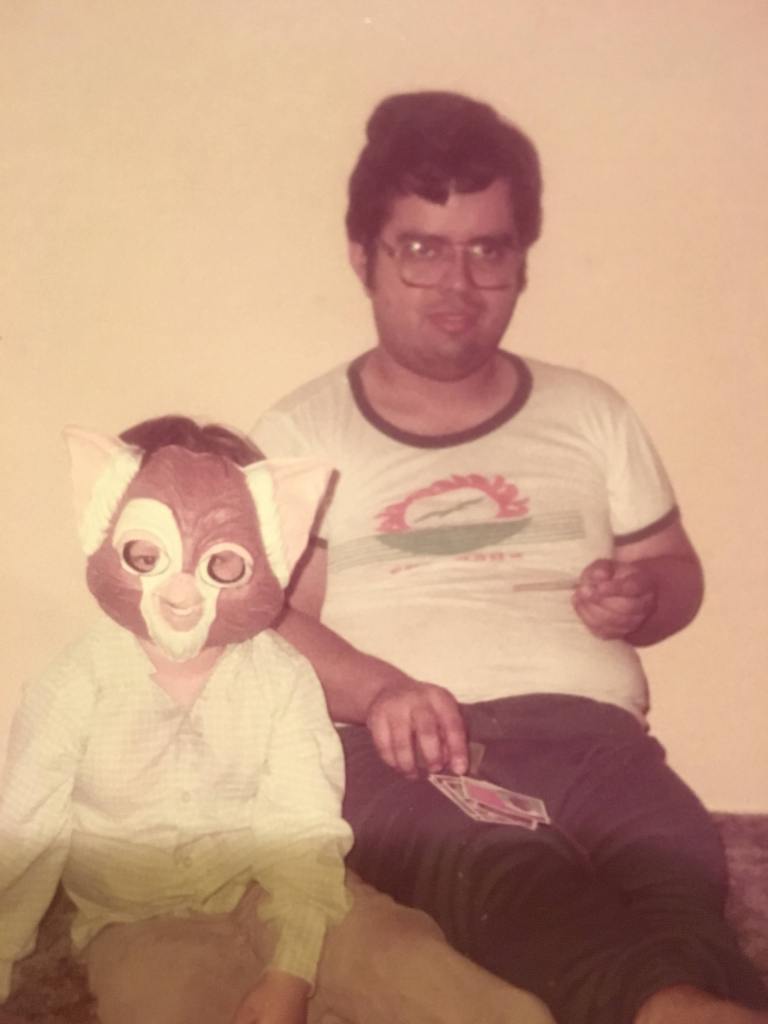
My own father, who is still alive today, was present but often absent in the ways that mattered. On weekends with him, my sister and I were taken to Toys R’ Us or Chuck E. Cheese, then dropped off at our grandparents’ house where he lived. Once there, he mostly slept. We had freedom — TV, soda, junk food — but not guidance.
He worked hard as an industrial radiologist for over forty years, waking early and coming home exhausted. I don’t want to paint him in a bad light. I love my father. But he didn’t offer the guidance a boy needs to grow into a man.
Because of that, I chose a different path.
From the beginning, I tried to be present, to provide, to guide. Those early years — 2013 to 2018 — were especially hard as the sole provider. Children are expensive, and I often reflect on how much it must have cost my parents to raise me. I remember forcing my dad to buy the most expensive toys, not understanding the burden.
He did try. He took us to Knott’s Berry Farm, Universal Studios, Ports O’ Call. But even then, it often felt like we were an inconvenience.
The Father I Am Today
My daughter is thirteen now — five years from adulthood. I’m grateful to have been here for every stage of her life. I hope she sees me differently than I saw my own father. I think she does.
Even when we lived with my father, he wasn’t active in her early years. He stayed in his room, sleeping. I’m thankful he took her to school when I was working, but today I get to take her myself — something she’s told me she values.
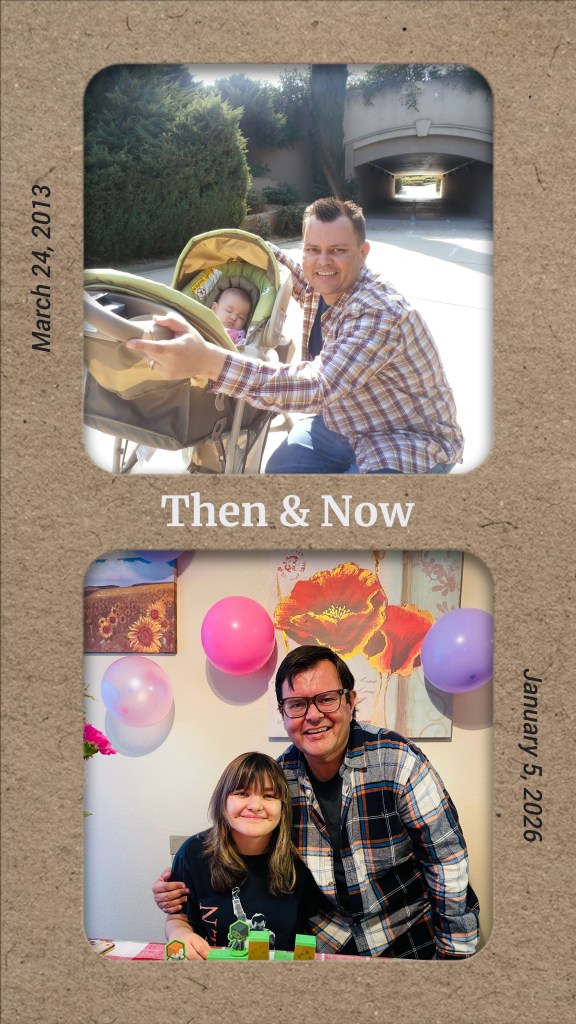
Still, I often feel like I’ve failed her, especially when I think about preparing her for college. She has everything she needs — food, a home, devices, love — but I compare myself to other fathers who seem to provide more. That’s my own internal battle.
Yet she tells me she loves me every day. Sometimes more than she tells her mother, which has become a running joke in our home. Daughters have a special bond with their fathers.
I see so much of myself in her — her creativity, her writing, her art, her music. But she’s also her own person: stronger, more outspoken, yet shy. Watching her grow is one of the greatest privileges of my life.
I’ve never spoken harshly to her or disciplined her the way I was disciplined. I wanted her to have freedom — to be a kid, to explore who she is. I’ve worked hard to break the cycle I grew up in.
A Final Reflection
There are fathers who are absent, abusive, or undeserving of the title. My mother’s father was one of them. Yet she still sought him out, still honored him on Father’s Day, still endured his abuse. That taught me something: fatherhood means something deep, even when the father fails.
Growing up, my sister and I honored our dad too — gifts, dinners, appreciation — even though he wasn’t the father we needed.
Father’s Day means something different to everyone.
This year, I’ll appreciate my role. I’ll acknowledge that fathers are often forgotten or taken for granted — especially the good ones. And that’s okay. Because the real reward of fatherhood isn’t in a single day of recognition. It’s in the quiet, everyday moments where our presence shapes a life.
Happy Father’s Day to all the dads.


