
My Lived Experience: Why Mental Health Is My Lifelong Battle
For those who have followed my blogs, rants, and reflections, you already know mental health is not an abstract topic for me — it is the air I breathe. It has shaped my life from adolescence into adulthood. In 2007, I attempted to take my life. That moment became a dividing line: before and after. A chapter that changed everything.
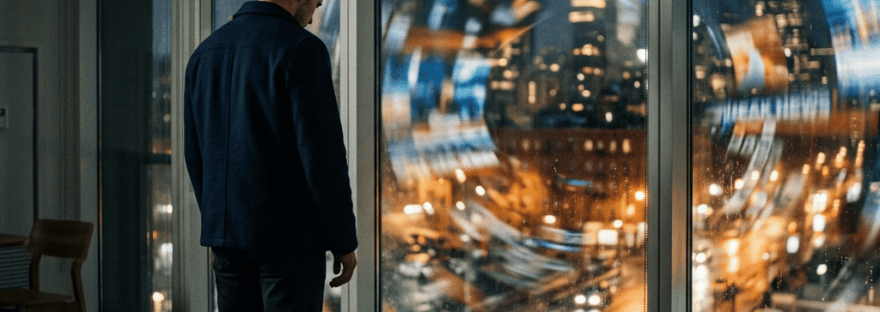
This fight never ends. I still struggle with self‑worth, with feeling like I matter, with finding satisfaction in my place in the world. The best way I can describe it is a war within — a quiet, relentless conflict that many of us carry but few ever see.
And I am far from alone. More than 1 in 5 U.S. adults live with a mental illness, and suicidal ideation has risen significantly over the past decade. My story is not an exception — it is part of a national pattern of suffering.
As a writer and creative, I feel the world’s pain intensely. The suffering of others, the instability of society, the emotional decline of the United States — all of it hits harder when you already live with mental health challenges. And today, simply “being okay” feels harder for millions.
What World Mental Health Day Really Means
World Mental Health Day is meant to center people with lived experience (PWLE) — those whose firsthand struggles give them knowledge that textbooks cannot teach. This year’s campaign calls for their voices to shape the policies, services, and decisions that affect their lives.
Too often, PWLE are asked to share their stories but excluded from the rooms where decisions are made. Awareness without inclusion is not enough. Being heard is not the same as being valued.
The Decline of Mental Health Support
One of the greatest declines I see today is the shrinking availability of mental health services. Yes, the United States has therapy, medication, and tools — but access is uneven, expensive, and often out of reach.
Statistics show the reality clearly:
- More than half (54.7%) of U.S. adults with mental illness receive no treatment.
- 61.4% of adults who need care say cost is the barrier.
- Globally, two‑thirds of people with mental disorders lack access to care.
Stigma still exists. Resources are strained. People are suffering in silence.
The Emotional Climate of America — And Leadership’s Role
On World Mental Health Day, I cannot ignore how the emotional climate of the country has been shaped by national leadership. This is my perspective, grounded in my lived experience and observations.
In my view, the current administration’s tone and behavior have intensified stress, division, and instability — all of which directly affect mental health. The president’s rhetoric, decisions, and public behavior contribute to a climate of fear and conflict. For many, especially those already struggling, this amplifies anxiety, hopelessness, and emotional exhaustion.
This is not about party lines — it’s about the emotional consequences of leadership, tone, and national instability.
Research supports the connection between political climate and mental health:
- The American Psychological Association reports that political stress is one of the top stressors for U.S. adults.
- 40% of high school students report persistent sadness or hopelessness.
- 21.4% of adults experience depressive symptoms in any given two‑week period.
Leadership influences national mood. Tone matters. Stability matters. Compassion matters.
The 24/7 News Cycle and Social Media: A Constant Assault
We do not live in a bubble. Even if we turn off the TV or delete apps, the world finds us. Social media algorithms push the most extreme content — not because it’s helpful, but because it’s profitable.
Studies show that heavy social media use increases anxiety and depression by 13–20%, especially when content is fear‑based or divisive.
Add to that the fact that the president uses social media as a primary communication tool. In my view, this spreads conspiracies, misinformation, and hostility. For people with mental health struggles, this constant exposure can worsen symptoms and erode emotional resilience.
Information overload is not just inconvenient — it is harmful.
Politics as an Emotional Force
Political climate affects mental health in profound ways:
- Stress and uncertainty from rapid policy changes and national conflict
- Fear and insecurity from divisive messaging
- Social fragmentation as polarization strains families, workplaces, and communities
- Burnout and vigilance from nonstop news and social media
These are not abstract concepts. They affect sleep, relationships, concentration, mood, physical health, and trust in institutions.
When people feel emotionally unsafe, they withdraw. They lose hope. They feel overwhelmed.
Art, Pain, and Legacy
Writing is my refuge — my release valve. But even art cannot always quiet the noise.
I think often about Vincent van Gogh, my favorite artist. A man whose genius was recognized only after tragedy. His suffering shaped his work, and his work shaped his legacy. His brother Theo carried that legacy forward after Vincent’s death by suicide.
Van Gogh’s suffering was documented in letters; today, millions of people suffer silently behind screens, unseen and unheard.
Artists often feel the world’s pain more intensely. Their emotional wounds become part of their myth, their brilliance, their story. And society often sees their value only after they are gone.
The Invisible Crisis: Suicide and Suffering
Mental health is invisible, and because it is invisible, it is often dismissed. But the numbers tell the truth:
- Suicide rates in the U.S. reached a 50‑year high in 2023, and the trend has not reversed.
- Globally, suicide is the fourth leading cause of death among people aged 15–29.
- More than 700,000 people die by suicide every year worldwide.
As someone who has struggled with suicidal ideation, I know the reality: it is not as simple as taking medication or seeing a therapist. Healing requires community, compassion, understanding — all of which are in short supply in a world obsessed with wealth, technology, and division.
People are suffering. Many are on the verge of giving up. And too often, their pain is ignored until it is too late.
A Call for Attention, Compassion, and Humanity
We must bring attention back to what matters: people. Our neighbors. Our families. Ourselves.
The world is loud, chaotic, and often cruel. In my view, it is becoming more divided, colder, and at times even heartless. But we are not powerless. We can choose compassion. We can choose awareness. We can choose to support those who are struggling.
Mental health is not a luxury. It is a foundation.
Check in on someone today — a friend, a coworker, a family member. A simple message can interrupt a spiral.
On World Mental Health Day, I ask one thing: Pay attention to the people who are hurting. They are everywhere.
Closing Reflection
This year, World Mental Health Day feels heavier, more urgent, because the emotional climate of our country is deteriorating — and those of us with lived experience feel that decline in our bones.
I’m choosing honesty, compassion, and awareness — because the war within becomes lighter when we face it together.


